

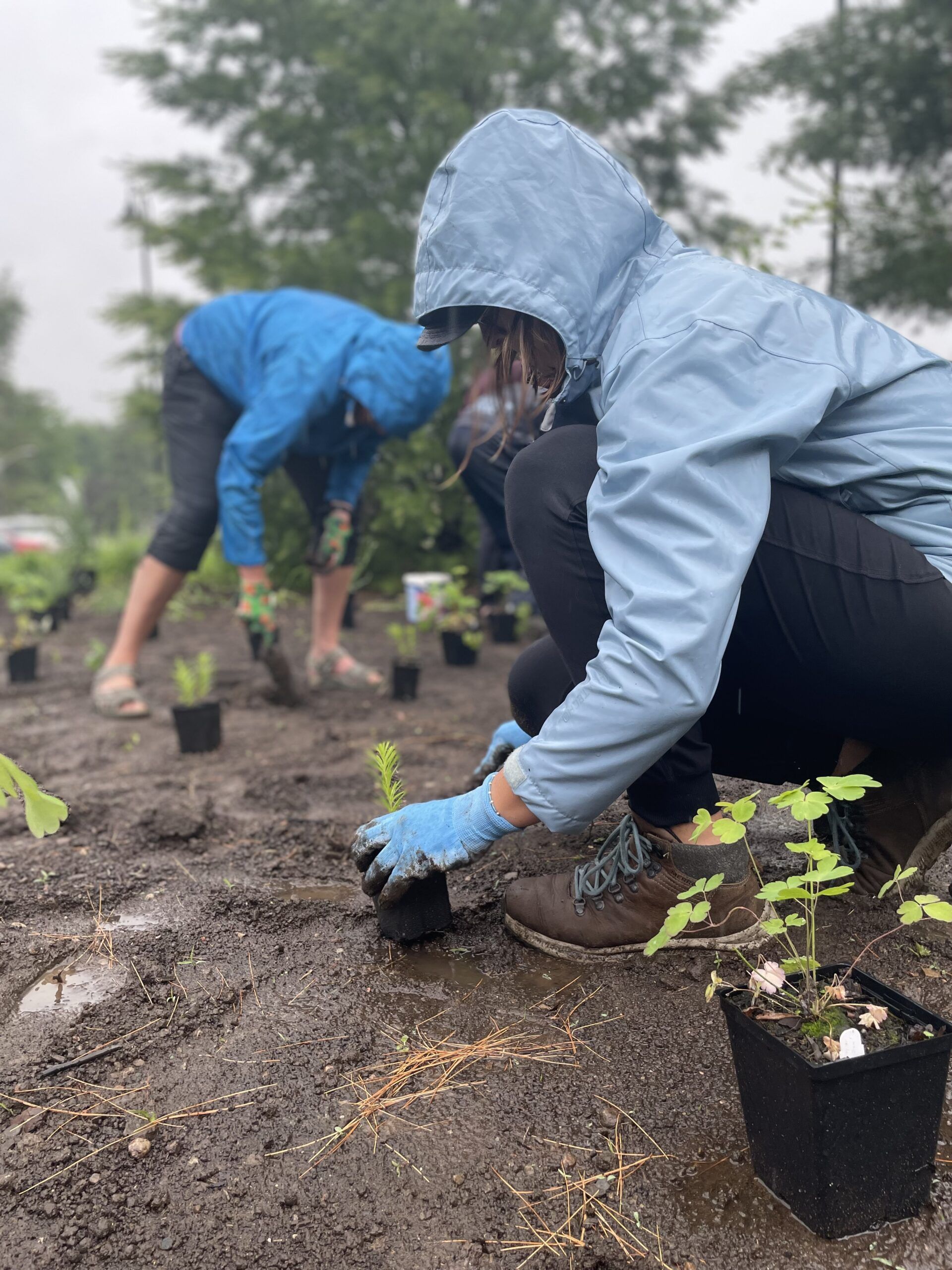

A partnership between the District of Muskoka, the TD Friends of the Environment Foundation, and the Muskoka Watershed Council will see more support for biodiversity in the area.
Lauren Valliere, Climate Initiatives Coordinator for the district, explains pollinator gardens include native species of plants, flowers, grasses, and shrubs that appeal to Muskoka’s native pollinators like bees, butterflies, insects, and birds.
The garden features a board explaining how pollinator gardens work and how residents can plant their own.
It says on the board that pollinators are any insect or animal that helps to pollinate flowers or plants. “Pollination is the transfer of flower pollen between plants as the pollinators buzz or crawl around in the garden, which allows the plants to be fertilized and grow their fruit, vegetables, or seed,” it reads. “Pollinators are essential to food production and about 80 percent of the world’s flowering plants depend on pollinators to grow and reproduce.”
Valliere says pollinators are seeing their habitats destroyed because of development, increasing extreme weather events caused by climate change, pesticide and herbicide use, predation, and disease.
“This garden enhances three previously non-native gardens with native plants to support pollinators, increase local biodiversity, increase community engagement, and promote the uptake of planting native species in Muskoka,” says Valliere. “This pollinator garden will be the first of its kind managed by the district and we are hopeful that it will act as a catalyst for additional pollinator gardens in the community and increase awareness of at-home projects that residents can undertake to support our natural environment.”
It was planted Tuesday in Bracebridge at 102 Pine St., in front of McVittie Place.
Valliere says the environment is one of the district’s top priorities and this garden is an example of them “not only talking the talk but walking the walk.”