

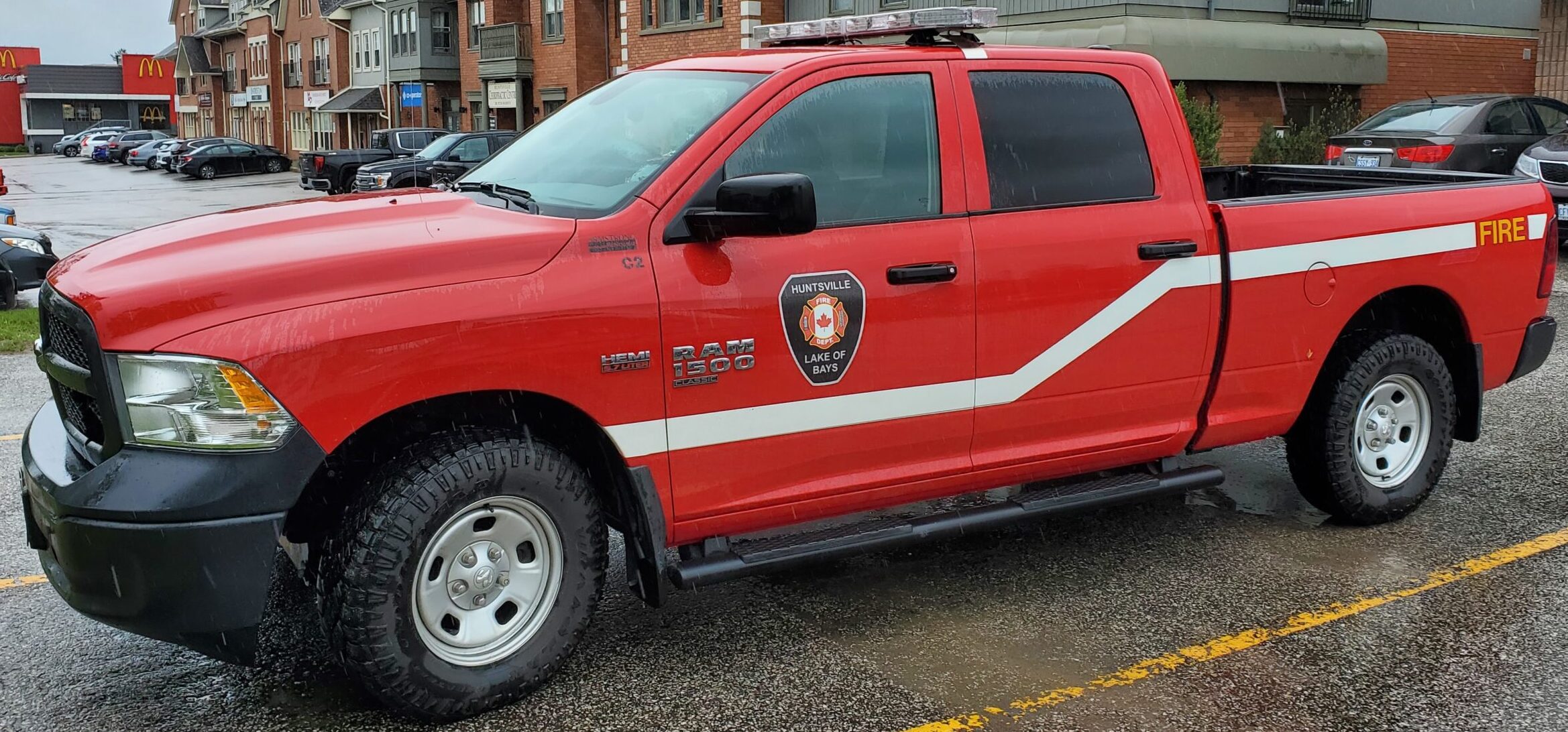

According to Paul Calleja, Deputy Fire Chief with the Huntsville/Lake of Bays Fire Department (HLOB), there is a growing concern about emergencies involving lithium batteries.
He, along with HLOB’s Fire Chief Gary Monahan, spoke to Lake of Bays council on May 9. Calleja said the fire department has hired a public educator whowill help create an awareness campaign about lithium battery safety. He explained the program will involve the fire department speaking with various groups about how to properly use devices with lithium batteries.
Calleja said that while lithium batteries are built to be safe and efficient when they became unstable, known as “thermal runaway,” they become difficult, if not impossible, to contain. “This is an internal short circuit and is a violent chemical reaction that takes place causing the battery cell to rupture, release a vapour in the form of hydrogen and produce significant heat,” explained Calleja. “The cell itself can become a projectile creating additional hazards. Often the initial cell in thermal runaway begins a chain reaction with the other cells in the battery pack and this event has the potential to propagate through every cell until the event comes to an end.”
If a thermal runaway is happening, Calleja said telltale sign is hissing or popping.
If someone hears that noise, Calleja said the first thing they should do is clear the area and call the fire department. “When lithium batteries go into thermal runaway there is nothing you can do about it,” said Calleja.
Once the fire starts, Calleja said that it can’t be extinguished using “traditional firefighting techniques” like dousing it with water or foam used by the department. The best way to attack it, according to him, is to cool the cells which could take a long time and a lot of water. “Because of this, a realistic consideration is to let the cell burn itself out and not apply water directly to it,” explained Calleja. “Fire control measures can still take place with existing materials in the proximity of the battery cells to help prevent fire spread.”
“If we can’t put it out, how are you going to put it out at home,” he added.
In the last six months, Calleja said there have been four incidents that involved lithium batteries. No one was injured, however, he noted that throughout North America there is a “significant increase” of causalities and property loss because of fires directly caused by lithium batteries.
“We’re not here to try and say you have to look under every rock for a lithium emergency,” said Calleja. “Lithium batteries, for the most part, are designed to work well and be safe.”
The issue, he explained, is when batteries get abused or used incorrectly. He added that when buying a new battery for something like an electric vehicle it may be cheaper to buy one online rather than go through the dealership. However, he pointed out that the battery likely isn’t designed specifically for what it’s being purchased for which, over time, could lead to issues like thermal runaway.
Calleja added issues could be caused when the device holding the battery is dropped or exposed to the elements (like the sun) for long periods of time. “It’s just knowing those things and being aware of them,” he said, adding that so long as the devices are taken care of, there will likely be no issues.
In his report to council, Calleja wrote that the plan is to use social media messaging and collaborate with the other fire departments in Muskoka to get the word out.